

The Silver Labyrinth is a first-person maze crawler. You walk a stone maze one cell at a time, fight in turns, grow a Lester class as you go and look for three seals. Hold all three and the way out opens. Somewhere in the maze, on some runs, a thief is looking for you.
- 4Lester classes, all open from the first run
- 60Skill ranks: six tracks of ten
- 3Seals, each with a way to win it without a boss fight
- 14Residents who trade, talk and bargain
It launches in Free Mode in Beta 2.18.0: no wallet, no sign-up, and your runs stay on your device. Ranked is coming later, on the LitVM testnet like every other cabinet, and isn’t open yet.
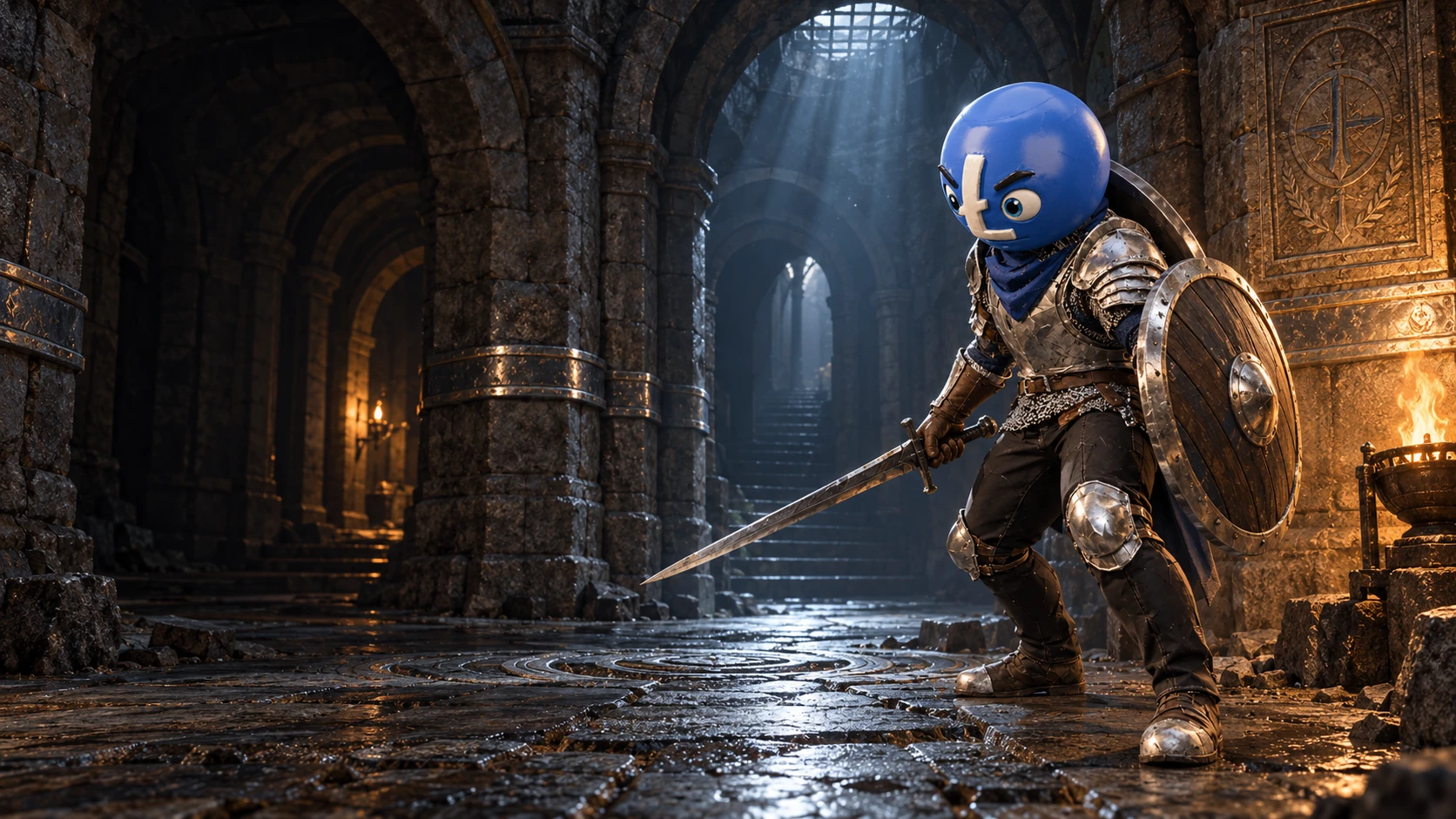
The story
The labyrinth was dug to keep a second metal honest. Gold was for keeping; silver was struck to move from hand to hand. To guard it, the first keepers built the Lit Engine, a rune machine that keeps the count of every silver lite and keeps an oath exactly, proven without showing every working. And they built the maze so that no single keeper could own its exit: three seals must agree before the way out opens.
Keepers who tried to hold it alone were swallowed by it. Now its custodians are trapped behind their own safeguards, and Lester goes down to carry the silver out.
If you know Litecoin, you’ll hear it in the walls. The count stops at eighty-four. The Bell of Blocks tolls every two and a half minutes of play. There are memory-hungry forges in the furnace district, a shadow called the Mimble Veil in the oldest halls, side passages called the Swift Ways, and a keeper’s scratched HODL, misspelled and kept that way on purpose. None of it gets in the way of the game. It’s on carvings, tablets, murals and in what the residents tell you when you ask.
How a run works
You choose a class and start at the entrance of a fresh maze, about 180 cells on a 25 by 25 grid, facing the way in. You explore, fight, take on missions, solve rune locks and trade, and you decide how much more to risk before you leave. Each run is one sitting. You can pause, but closing the tab ends the run, and nothing carries over to the next one except what you learned.
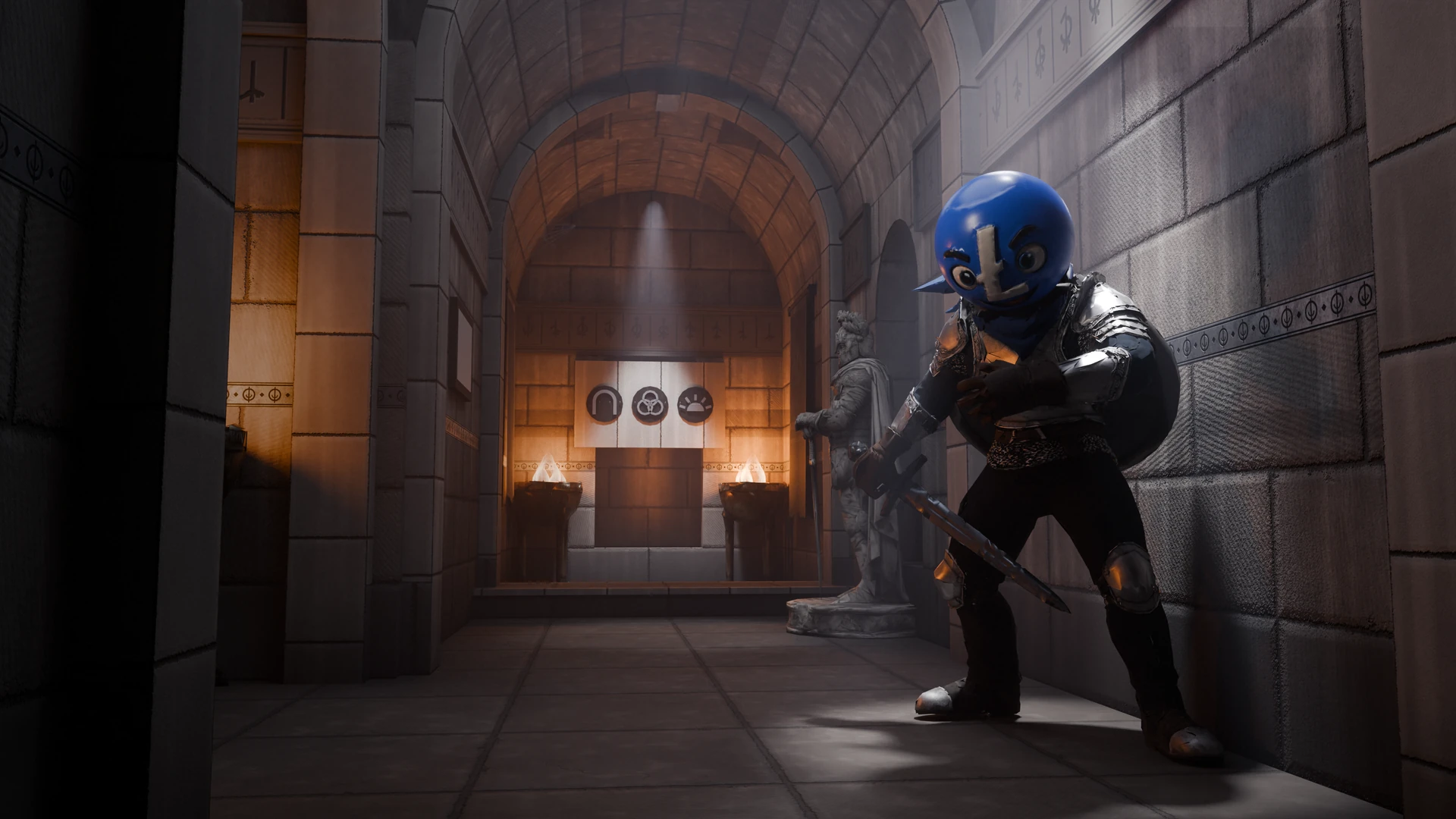
Movement is on the grid: a step forward or back, a quarter turn left or right, or a full turn around. There’s no strafing and no mouse-look. Steps take about a quarter of a second and the game remembers your next move, so a held key walks you down a corridor at a steady pace.
When a group blocks the way, a card names who you’re facing, “Two Wick Wraiths and an Ash Imp block the way!”, and the fight is turn-based. Every enemy shows what it means to do next, so you’re reading the room instead of guessing.
| Action | What it does |
|---|---|
| Attack | Hit one target with your weapon. You always have an attack, even bare-handed. |
| Guard | Take 50% less damage until your next turn |
| Focus | Recover 4 mana (up to 8 per fight) |
| Item | Use something from your bag. It costs your turn. |
| Ability | Your class’s own move, paid in mana, with a cooldown |
| Flee | Shows your chance first. If it works, you step back to where you came in. |
Turn order goes by Agility. An action you can’t take still answers when you press it, and tells you why.
Controls
| Do this | Keyboard | Controller | Touch |
|---|---|---|---|
| Step forward / back | W / S or Up / Down | Left stick or D-pad | Forward and back buttons |
| Turn left / right | A / D or Left / Right | Left stick or D-pad | Turn buttons |
| Turn around | Q | B | Turn |
| Interact, talk, trade | E or Enter | A | The centre button, which names what it will do |
| Map / bag / skills | M / I / K | Y / X / – | Map, Bag, Skills |
| Pause | Escape | Menu | Pause |
| Do this | Keyboard | Controller |
|---|---|---|
| Attack | Enter or E | A |
| Guard | G | B |
| Focus | F | LB |
| Class ability | Q | Y |
| Item | I, then 1–9 | X |
| Flee | R | View |
| Change target | A / D or Left / Right | Left / Right |
On a phone the touch pad sits under the view in portrait or landscape, and its buttons are at least 48 px.
The four classes
Every class is Lester and all four are open from your first run. They differ in what they start with and in their class ability.
| Class | Starts with | Health / mana | Class ability |
|---|---|---|---|
| Silverguard | Worn silver blade, patched mail | 120 / 24 | Hold the Line: take 60% less damage until your next turn and counter the first melee hit |
| Runesage | Ash staff, apprentice robes | 96 / 52 | Rune Break: arcane damage of 10 plus twice your Focus, ignoring half the target’s arcane resistance |
| Chainwarden | Ritual gauntlets, travel vestments | 112 / 36 | Binding Oath: weaken the target’s next two attacks and shield yourself |
| Veil Ranger | Shortbow, scout leathers | 104 / 32 | Mark the Passage: a shot that pierces armour, then a three-turn mark that adds 30% damage and shows the target’s next two moves |
The Silverguard can take a beating, the Runesage hits hardest with spells but folds quickly, the Chainwarden controls a fight and the Veil Ranger is the fastest of the four. Each class ability costs mana and has a cooldown of three or four turns.
Sixty skill ranks
Fights and seals earn experience, and every level gives you one skill point. There are six skill tracks of ten ranks each, and any class can study any of them.
| Track | Each rank gives |
|---|---|
| Vitality | +8 maximum health |
| Might | +1 Power |
| Agility | +1 Agility |
| Resolve | +2 Armour |
| Arcana | +1 Focus |
| Spirit | +4 maximum mana |
Every rank also comes with a named perk, sixty in all. A few of them: Spare Breath (Vitality 5) survives one lethal hit per run at 1 health; Cleave at Might 8; Read the Room (Agility 9) shows enemy resistances; Firm Terms (Resolve 4) knocks 5% off traders’ prices; Soul Ledger (Spirit 9) gives back 8 mana after each boss.
Rank six of every track gives a class resonance, a bonus that is different for each class. A Runesage who puts six points into Resolve gets something a Silverguard doesn’t, so the same track plays differently in different hands. Skill tomes from traders and caches give extra points. We’re aiming for a normal successful run to earn somewhere between 18 and 25 ranks. That’s a target; we’ll check it against real players.
Three seals
You need three seals to leave: Passage, Concord and Dawn. Every one of them can be won without fighting its boss.
| Seal | What it stands for | Fight for it | Or |
|---|---|---|---|
| Passage | The right to move | Defeat The Silver Castellan | Restore the three oath tablets |
| Concord | The agreement of many | Defeat Mother of Roots, or The Clockwright on about half of mazes | Solve the reflected-light rune lock, or the Stop the Count puzzle beside the Clockwright |
| Dawn | The bell tolls again | Defeat The Cinder Custodian | Repair the bypass, or strike a bargain with Voss the Scales |
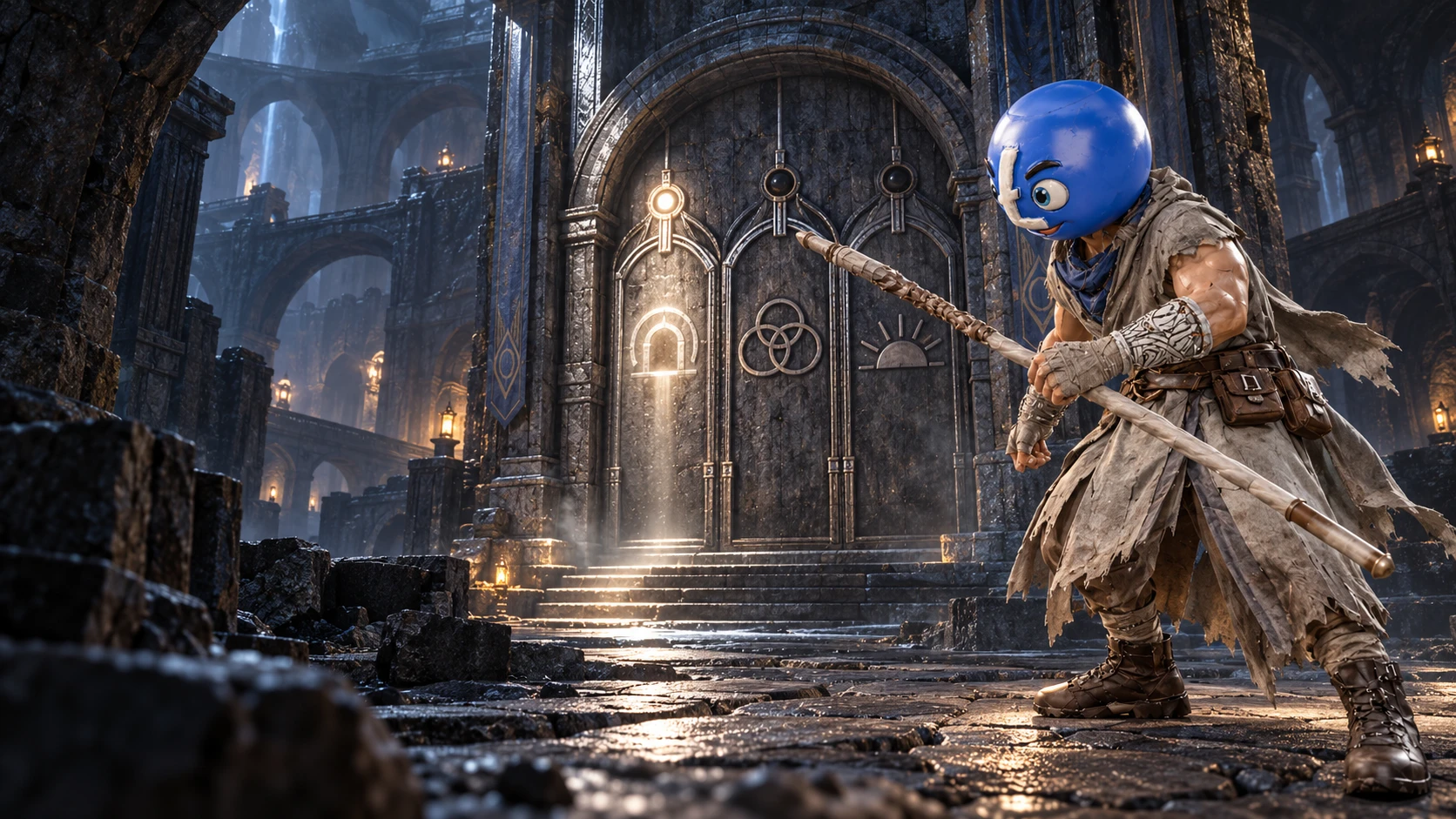
The seal sockets on your screen show each one as missing, held or lost. Rune locks work from clues: six rune words (Ash, Bell, Crown, Dawn, Eye and Flint) are carved around the maze, and a lock wants three of them in the right order. A wrong guess costs 6 health but never kills you.
Residents, traders and bargains
Fourteen people are stuck down here, and a run meets some of them: two traders, six others drawn from the rest, and always Elian of the Third Door, a courier with a broken seal mould. Others include Mara Flint the supply runner, Old Tamsin at the well, Bren Cinder from the furnace crews, Finch the young scavenger and the Bell Widow, who listens for the thief.
- Talk. Conversations offer two to four choices, and every one shows its cost before you pay. Each resident will answer one question about the labyrinth’s past.
- Trade. Traders keep a limited stock and a limited purse, and you can’t sell things back and forth for profit.
- Bargain. Voss the Scales sells relics, and for 120 gold he’ll sell you the Dawn seal.
Gold buys things but never counts toward your score. You start with 30.
Lazarus
About a quarter of runs carry a thief. Lazarus can arrive once you’ve been exploring for eight minutes. One line tells you something has entered the labyrinth, and that’s all: he never shows on your map.
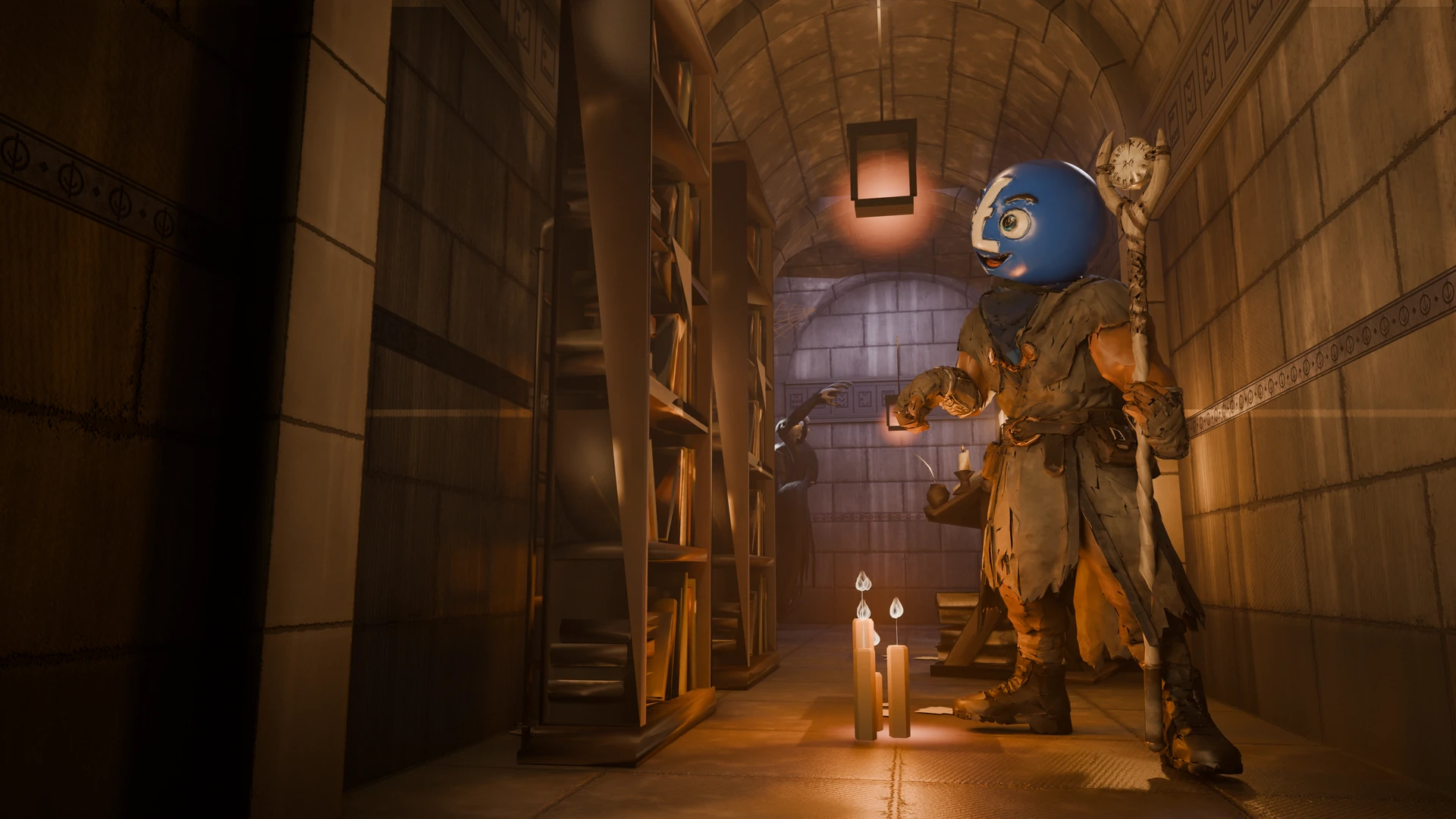
- You can outrun him. He moves two cells a second, slower than you walking, and he arrives at least eight cells away.
- The world stops for him too. Fights, conversations, puzzles and trades freeze him, and stepping out of one gives you a short head start, once per encounter.
- Your ears help. Distant footsteps come before he’s close.
- If he catches you, he takes your gold, your bag, your weapon, armour and charm, and every seal you hold. You keep your level, skills and map, and you’re left with Anxiety: healing items work 10% less for the rest of the run. He’ll only come for you while you still need a seal, and at most twice a run.
The seals he takes can be won back, though you won’t score them twice.
Enemies and bosses
Twenty kinds of enemy live in the maze, from Vault Rats and Ash Imps to Furnace Brutes, Glass Scribes that ward their allies, Oathbreakers that punish you for repeating yourself and the Veil Stalker’s telegraphed eviscerate. Every enemy telegraphs its wind-ups, and some ask for a particular answer:
- Bellwright Archer. Draws and holds a volley. A Guard blocks it completely.
- Mold Tender. Plants Spore Pods beside it. They’re weak to fire and wither when the Tender falls.
- Rust Gnawer. Every bite corrodes your armour for the rest of the fight, unless you’re guarding.
- Ledger Mimic. One shelf in every maze is alive. It eats some of your gold and gives it all back when it dies.
- Ember Mites. A swarm of three that strikes once for each third still alive. Weak to frost.
- Lamplight Shade. Fades out of reach unless you’ve marked or revealed it, then snuffs the light and blinds you.
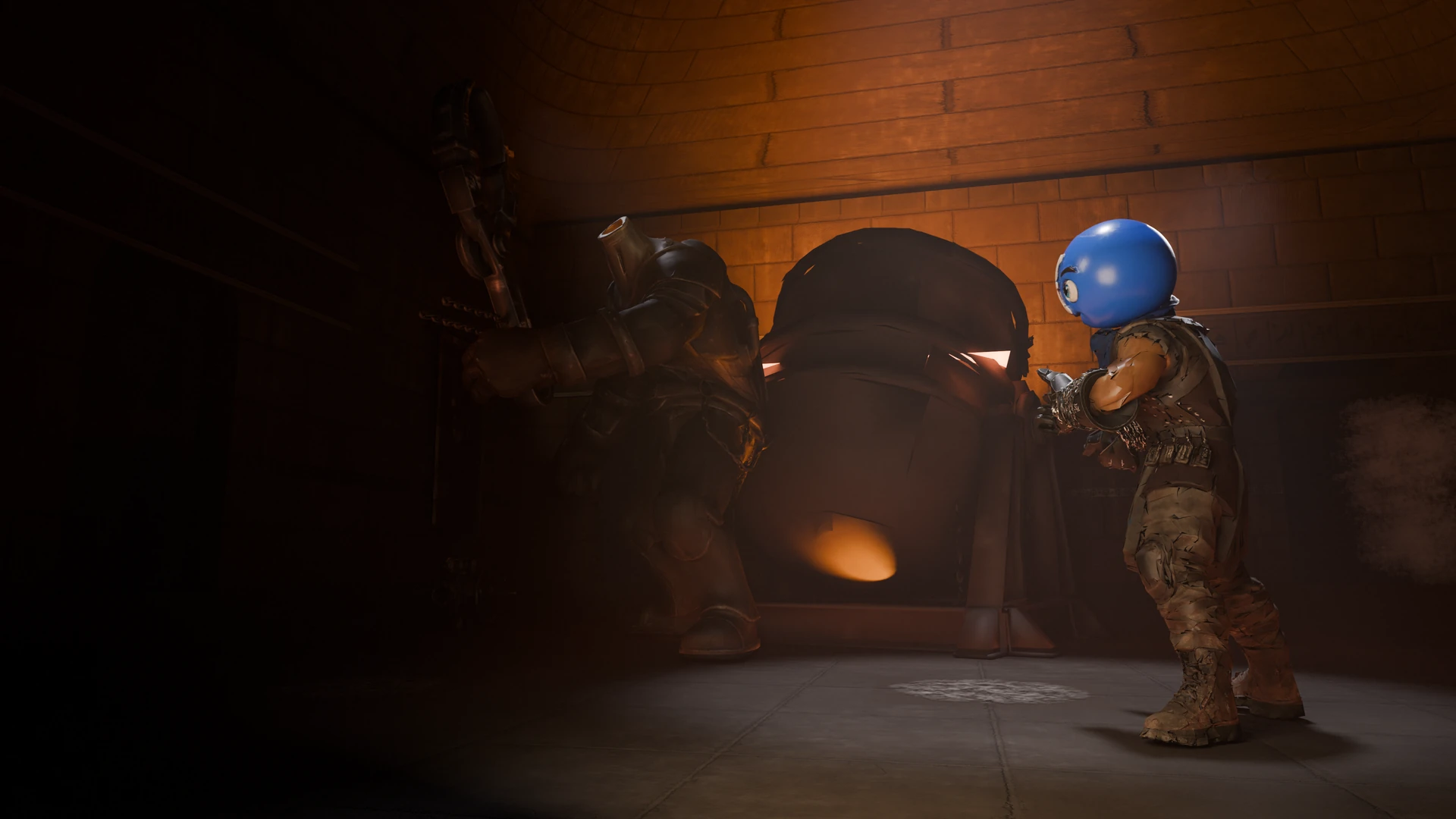
| Boss | Guards | How it fights |
|---|---|---|
| The Silver Castellan | Passage | Cycles a covenant shield and announces a heavy oath strike. Hits harder below half health. |
| Mother of Roots | Concord | Grows roots that feed her next attack, sprays poison, grabs. Weak to fire. |
| The Cinder Custodian | Dawn | Builds pressure into a fire blast. Break the pressure valves to soften it. |
| The Unwritten King | Nothing but your pride | Optional. Copies whatever you did last. |
| The Clockwright | Concord, on about half of mazes, once you’ve explored for 20 minutes | Raises a gear shield and overclocks into a heavy blow. Below half health it sheds its plate and hits harder. |
| The Unspent | Nothing; it wakes only on deep runs, after 40 minutes of exploring | Optional. Hides behind a coin shield, calls Coin Wraiths, then telegraphs a slam that spends everything it has. Beat it for a Ward ring. |
The maze also has six kinds of hazard (unstable floors, poisoned pools, cursed inscriptions, falling mechanisms, suspicious shrines and toll doors). Each shows its odds before your one attempt, and a failed attempt can hurt you but never kills you.
Scoring
Score comes from what you did, not how long you waited. Nothing scores for dialogue, buying or selling, and each source pays once.
| Source | Score |
|---|---|
| Escape with all three seals | 35,000 |
| Each seal, the first time you take it | 6,000 |
| Each boss | 5,000 |
| Escape speed bonus | up to 3,000 |
| A mission | 1,200 |
| An optional rune lock | 500 |
| A clean boss phase | 300 |
| Each ordinary enemy | 200 to 600, by how dangerous it is |
| A landmark found, a hazard survived | 200 each |
A bare escape is worth at least 53,000, and a deep run that dies can still outscore it. Your results screen lists the score by source and the ending: Escaped, Defeated or Abandoned.
Achievements and the Locker
The Silver Labyrinth has 12 achievements, from First Footsteps and Threefold Covenant to Without a Sound and Four Faces of Lester, and four Locker slots: class trim, weapon sheen, lantern tint and portrait frame. Looks change nothing in play.
Achievements and Locker looks are earned from verified Ranked runs, so none of them can be earned yet. Free runs don’t earn achievements or looks, and Ranked opens later.
| Look | Slot | How it unlocks |
|---|---|---|
| Silver | Class trim | Escape once (Daylight) |
| Fractured silver | Class trim | Escape after Lazarus has caught you |
| Keeper | Weapon sheen | Defeat the Castellan, Mother of Roots, the Cinder Custodian and the Unwritten King, across runs |
| Ashen | Lantern tint | Complete a tier-four mission or harder |
| Runic | Portrait frame | Finish five missions in one run |
| Covenant | Portrait frame | Escape with every class |
How we built it
The owner’s brief for the look fit on one line: Hexen meets Diablo meets DOOM. We took first-person dark fantasy from Hexen, worn gothic surfaces from Diablo and the weight of DOOM’s chunky weapons and hit-stop, then designed everything ourselves. The encounter card owes a debt to Dragon Quest, and the habit of telling the story on walls, tablets and murals instead of in cutscenes is close to Myst. Those were the touchstones. Every design, glyph and character is original.

- One place, slowly failing. The maze has four kinds of hall on the same masonry: the pale Silver Halls, the wet Rootbound Vaults, the furnace-lit Ashen Foundry and the shelved Veiled Archive, each with its own palette. Seventeen set-piece rooms, from a fountain court and a bathhouse to a crypt yard and a grotto, dress the bigger spaces. Three of them are new: Engine Heart in the Ashen Foundry, where the Clockwright waits; Mint Gallery in the Silver Halls; and Ledger Stacks in the Veiled Archive, where the Ledger Mimic hides among the shelves.
- Retro, not photoreal. Characters, bosses, residents and props were modelled in Meshy, then rigged and animated in Blender and exported with hand-painted, limited-palette textures and baked light. Settings has an optional retro filter, soft or chunky, with ordered dither, if you want it rougher still.
- Loot you can read. Chests come in three looks, common, rare and relic, by what’s inside, and bandages, rations, whetstones, runes and mission pieces lying in the halls each have a model of their own.
- Lazarus is the darkest thing on screen. Tall, narrow, in fractured dark cloth with silver edges, and the only thing in the game that dims the lamps.
- Every sound is made live. Footsteps on each surface, doors, ambience for each kind of hall, spells and the Bell of Blocks are all built with Web Audio as you play: about fifty sound recipes and no sample packs. The music is the arcade jukebox.
- The menus are props. The bag is a leather travel case, the skills a vellum folio, the trader a merchant’s ledger and the map a parchment survey sheet, each in your class’s colours.
- Three quality levels. Low, medium and high, with lighter textures and fewer lights on low. Gore can be off, restrained or full, and there are reduced-motion and reduced-flash settings.
The pictures in this post are promotional art: the owner’s banners and our own Blender renders of the game’s models.
What’s next
- Ranked. It’s wired up the same way as the other cabinets: the arcade’s server replays each run before anything is published. It opens after the owner signs off, on the LitVM testnet, where zkLTC has no monetary value. Achievements and Locker looks come with it.
- Your numbers. We’ve tuned the maze with bots. We want to know how often real players escape and how Lazarus feels, and that only comes from you playing it.